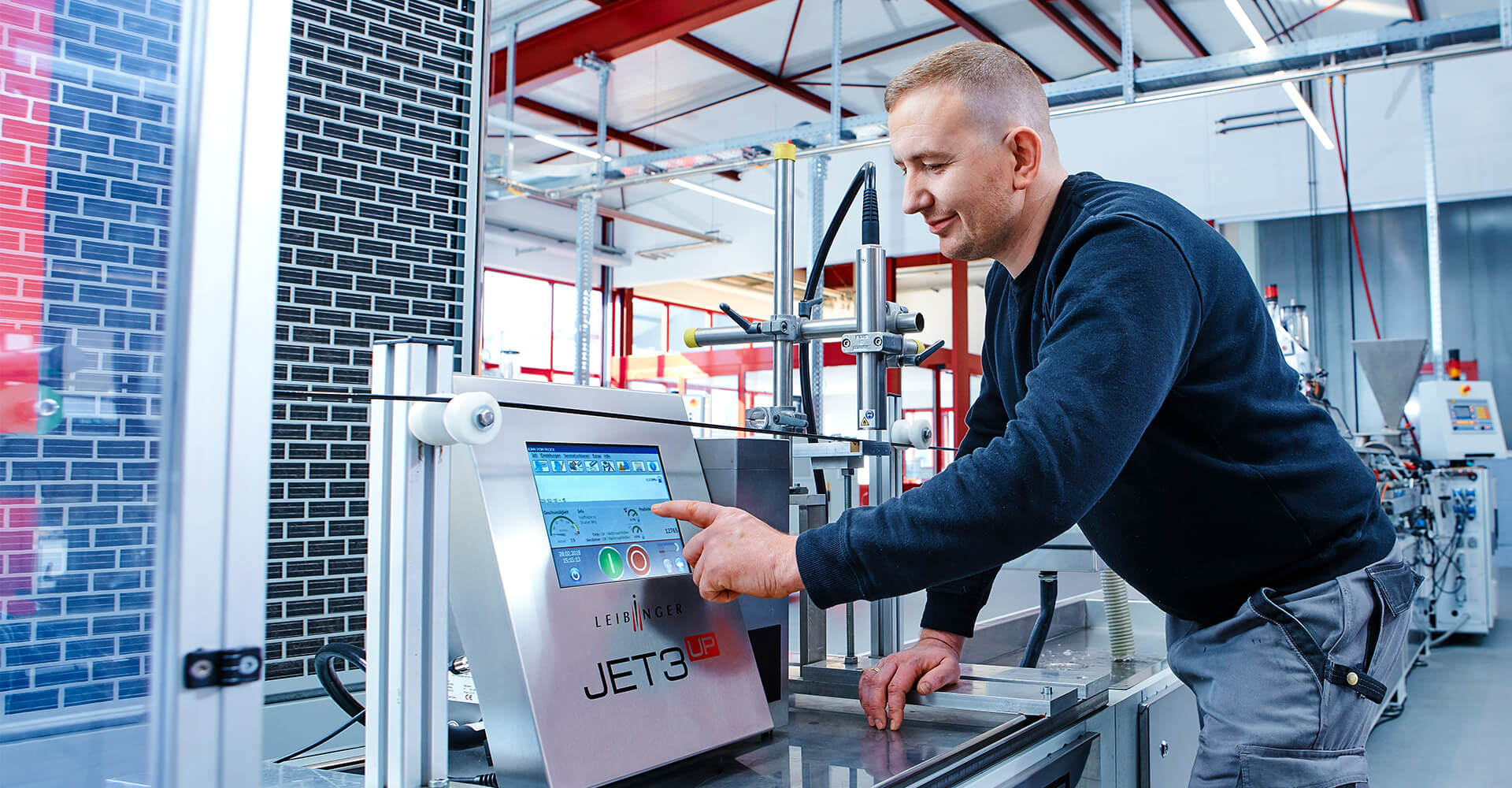
In today's manufacturing industry, accurate product identification and traceability are more important than ever. Food products, pharmaceutical packages, automotive components and FMCG products need information such as manufacturing dates, expiry dates, batch numbers, serial numbers and barcodes. This process, known as industrial coding and marking, supports product traceability, industry requirements and smooth production operations.
Three widely used technologies are Continuous Inkjet (CIJ), Thermal Inkjet (TIJ) and Laser Marking. Each offers different advantages depending on production speed, printing surface, print quality and operating costs. The right choice depends on your application—not simply on which technology is most popular.
Understanding the Three Industrial Printing Technologies
Continuous Inkjet (CIJ) Printing
A CIJ printer generates a continuous stream of tiny ink droplets through a specialised nozzle. Electrically charged droplets are controlled to form characters and codes on a product. Unused droplets are collected and circulated back into the ink system. As a non-contact process, CIJ can print on moving products, curved surfaces and irregular shapes.
CIJ printers are commonly used for dates and batch numbers on plastic bottles, glass containers, aluminium cans, cables and industrial components. Their strengths include high-speed production, flexibility across product shapes and materials, and specialised ink options. However, CIJ requires regular ink and solvent replenishment, periodic cleaning and maintenance. Operating costs depend on ink consumption, production volume and servicing.
Thermal Inkjet (TIJ) Printing
TIJ printers generally use replaceable ink cartridges. Heating elements rapidly heat the ink, creating vapour bubbles that push droplets through microscopic nozzles onto the printing surface. This produces text, barcodes, QR codes and other product information.
TIJ is widely used in pharmaceutical packaging, carton printing and FMCG packaging where sharp characters or detailed barcodes are important. It offers high-resolution printing, clean cartridge replacement and minimal routine maintenance. Cartridge consumption can increase operating costs in high-volume production, and printing distance and material compatibility may be more limited than CIJ. Always check ink compatibility with the substrate.

Laser Marking Technology
Laser marking does not use printing ink. A focused laser beam interacts with the material surface to create permanent or highly durable marks through engraving, surface modification, colour change or controlled material removal.
CO₂ lasers are commonly used for paper, cardboard, glass, wood and certain plastics. Fibre lasers are widely used for metals and selected engineering plastics, while UV lasers suit finer marking and reduced thermal impact on certain sensitive materials. Laser systems are used in automotive, electronics and engineering industries for serial numbers, identification codes and traceability information.
Laser marking eliminates printing ink and makeup fluids and can reduce recurring consumable costs. Limitations include higher initial investment, laser safety requirements, possible fume extraction needs and material-specific suitability.

CIJ vs TIJ vs Laser: Key Differences
CIJ uses continuous ink droplets and suits flexible, high-speed product coding. TIJ uses heat-based ink ejection from cartridges and is useful for high-resolution text and codes. Laser marking uses a focused beam to create durable marks without printing ink.
CIJ typically has a moderate initial investment with recurring ink and solvent costs. TIJ can have a lower equipment cost, but cartridge consumption may increase operating expenses. Laser systems usually require a higher initial investment, while recurring printing consumables are lower. Actual performance, speed, material compatibility and cost vary by machine model, ink formulation, laser type and application.
Which Technology Is Best for Your Industry?
Food and Beverage: CIJ is common for high-speed coding on PET bottles, glass bottles, aluminium cans and containers. TIJ is useful for detailed carton and label printing. Laser can be considered for compatible packaging requiring permanent or ink-free marking.
Pharmaceuticals: TIJ suits high-resolution carton coding and compatible packaging. CIJ is frequently used for bottles and containers. Laser may be used for compatible packaging or components requiring permanent identification. The solution must meet applicable regulatory and packaging requirements.
FMCG: CIJ supports versatile coding on bottles, pouches and containers. TIJ is useful for detailed information and barcodes on cartons. Laser is an option for selected compatible packaging applications.
Automotive: Fibre laser marking is commonly used for durable identification on suitable metal components. CIJ can print identification codes on moving components and compatible surfaces.
Electronics: UV and fibre laser systems can mark selected electronic components and circuit boards, subject to material compatibility and thermal sensitivity.
Packaging: CIJ is useful for inline coding on moving products, TIJ for high-resolution carton printing, and laser for compatible materials where ink-free marking is preferred.
How to Choose the Right Industrial Coding Technology
Evaluate production line speed, the exact printing surface and material, required print quality, code readability, maintenance capabilities and total cost of ownership. Consider ink or cartridge consumption, solvents, spare parts, electricity, installation, integration and production downtime—not only the purchase price.
The production environment also matters. Dust, moisture, heat, vibration and washdown conditions can influence equipment selection and installation. Conduct sample printing or marking tests on actual products and verify code readability under real production conditions.
Conclusion
There is no single industrial coding technology that works best for every manufacturer. CIJ printers suit flexible, high-speed coding across different product surfaces. TIJ printers are ideal for high-resolution printing, particularly on cartons and compatible packaging materials. Laser marking is suitable for permanent, ink-free identification on compatible materials such as metals and selected plastics.
The right decision should be based on production speed, substrate, code requirements, maintenance capabilities and long-term operating costs. Testing the application and comparing total cost of ownership can help avoid unnecessary expenses, poor code quality and production interruptions.
Frequently Asked Questions
What is the difference between CIJ and TIJ printers?
CIJ uses a continuously circulating stream of ink droplets, while TIJ uses heat to eject droplets from replaceable cartridges. CIJ is commonly selected for versatile, high-speed coding; TIJ for high-resolution printing on compatible packaging.
Which is better, CIJ or TIJ printing?
Neither is universally better. CIJ suits high-speed coding on different product shapes and materials, while TIJ is useful for sharp text, barcodes and detailed printing.
Is laser marking better than inkjet printing?
Laser marking offers permanent or highly durable marks without printing ink, but usually costs more initially and is not suitable for every material. Inkjet is often more flexible for variable product coding.
Which industrial printer is best for plastic bottles?
CIJ is commonly used for dates and batch numbers on plastic bottles. TIJ or laser may also be suitable depending on plastic type, ink compatibility and marking requirements.
Can TIJ printers print QR codes and DataMatrix codes?
Yes. Readability depends on resolution, code dimensions, substrate quality and printing conditions.
Does a laser marking machine require ink?
No. Laser marking uses a focused beam rather than printing ink, although extraction filters or other maintenance components may need replacement.
Which technology has the lowest operating cost?
Laser can reduce recurring consumable expenses, but initial investment, installation, extraction and maintenance must also be considered. The actual advantage depends on production volume and application.
Can CIJ, TIJ and laser printers be integrated with automated production lines?
Yes. All three can be integrated using suitable sensors, encoders, PLCs and communication interfaces. Requirements depend on the printer model and existing production equipment.
Looking for the right industrial coding and marking solution for your production line? Consult an industrial coding and marking specialist to evaluate your application and identify a solution that meets your manufacturing requirements.